Think outside the bots
A short(ish) rebuke on ‘people with AI will replace you’. GenAI is a great accelerator, and will accelerate both good and bad. Producing great looking bad things is now easier than ever. There are parallels with digital photography: it will be the deciders that will persist — regardless of them using the latest tools.
People say:
With AI anyone can build anything. The walls between engineer, designer and product manager are gone. If you don’t use AI, you will be surpassed by a junior who can. Publish code or perish.
Yes, we get it.
The cost of creating artefacts has dropped significantly. Any ‘idiot’ can press the “create new website”-button 5 times and get a beautiful looking result. Everyone on the team can create new functionality in the app just by blurting out a request to a team of agents.
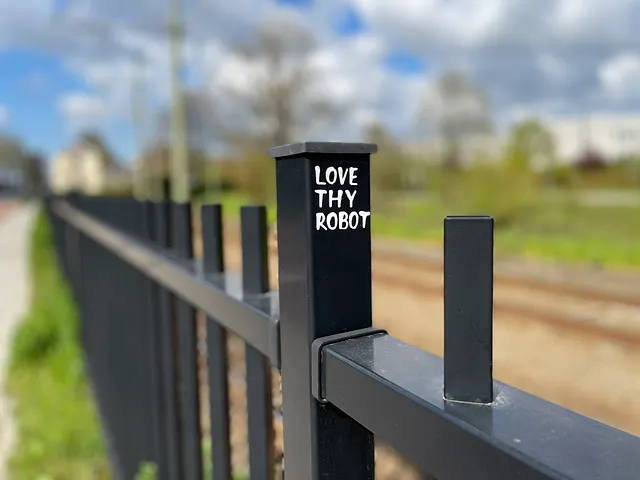
We can all make beautiful things at the press of a button. “Generate 10.000 images while I get my morning cup of coffee”. But should we? Will we?
Will future workdays really be an endless streams of token-burning artefact slopfests?
Will companies simply become highly competitive sweatshops where each employee tries to outcompete their peers to rush more great-looking things into being?
Will we generate ever bigger mountains of ‘things’— presentations, website designs, features in the app, documents, jira-tickets, research insights — which other employees subsequently consume with their genAI to create even more beautiful artefacts to pile onto the Lonely Mountain of the Unseen and Unread?
(or even (shudder) horrible ‘employee-less’ companies, run fully by agents slopping around slop and publishing Mountains without human involvement?)
I’m not convinced.
We’ve been here before with digital photography #
The age LLMs has a ring of an echo of the age of digital photography. Digital photography, and later camera-phones democratized the creation of photos. Where professional photographers had expensive tools at their disposal, amateurs were limited by their tools.
The average phone can create photos at a quality that is equivalent to the best professional camera of five years ago. And taking photos is cheap. The cost per photo is practically 0.
How many photos are in your grandmothers’ photo-album? How many in your fathers? How many in yours? How many in your children’s? I’m betting those numbers increase exponentially.
You can take 150 photos per day of your holiday. But are those photos memorable? What’s the point of those photos?
Nobody. Nobody likes to sit through a slideshow of your holiday photos. We want to see maybe 5 of your photos. That’s enough.
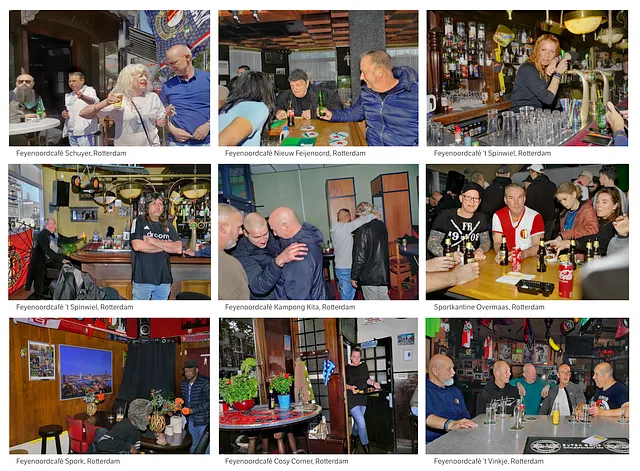
How many photos does he shoot before getting the right one?
Otto only works analogue and has a roll of just 8 photoswith him
„I select while watching, then I don’t have to do that at home afterwards.”
But Otto, where is your AI usage? Where is your DSLR? How are you outcompeting the colleagues that use Technology™️?
This is not a love song for luddites #
Whether or not Otto shot analogue or digital is not the point. He could’ve used his iPhone to make 1.000 photos. You could’ve used your iPhone to make 2.000 photos.
The point is, that Otto thought about how to limit his output before sharing. He decided where he would guide the attention of the viewer. He did the hard work of making a decision, so his audience doesn’t have to. His value is as much in the technical quality of the photo, as in the decision which photo to share (I’m not even sure there is such a big difference between those two).
It’s not about who can produce moarrrr. It’s about who will make the decisions. More things just means more cognitive load for the audience. Making decisions is the deciding factor in separating the good from the bad.
By all means, use the best tool at your disposal. The best tool can be genAI. Sometimes it won’t be, sometimes the best tool is a whiteboard. Your single post-it note drawing can beat someone else’s amazing AI-generated prototypes, if you are at the right moment.
From template to contemplate #
AI is great at creating artefacts. Beautiful artefacts. Each new model creating nicer looking things than the previous. If you like what you see today, you won’t believe what you’ll see tomorrow!
The tools are evolving at break-neck speed. You only just understood what an “MCP” is, and now that term is ancient history again. You just figured out how to get Cursor to work, and now Claude can do everything it could do and more.
How can you ever keep up?
Maybe…
Maybe that’s the wrong question?
Maybe you shouldn’t keep up?
The tools will come to you. They will come to your work.
GenAI is amazing technology. I use it everyday. But the value of my work is not in using the tools. The value is in the thinking. The value is in the choosing. The value is in knowing what to say, deciding what not to say.
This article was written without GenAI. It didn’t need to be. I could’ve asked an AI to generate ten versions of it. Or 100. You could’ve asked an AI to generate it, or generate a 1000 versions. The point is: you didn’t. Instead you read what I chose to publish.
Take the time to think. Help others by making decisions. The moment between action and response is where you have the edge over the AI-fueled colleague. They may produce more, but should they?
Addendum: Think about this #
Think about this. No, really sit for a moment and think about this. I wanted to pick a photo to illustrate my point, and this one doesn’t let me go.
Below is a photo made in 1908. Not AI generated. Not shot on an iPhone. Not even shot with a phone, nor with a DSLR. And it wasn’t made on a fancy analogue camera with a multitude of options. Leica, Hasselblad, Canon, none of these existed. And yet. This photo still makes an impact today.
Below you see Sadie Pfeifer, working in a cotton mill.
A kid. Just 48 inches. Working in a factory. Not even 10 years old.
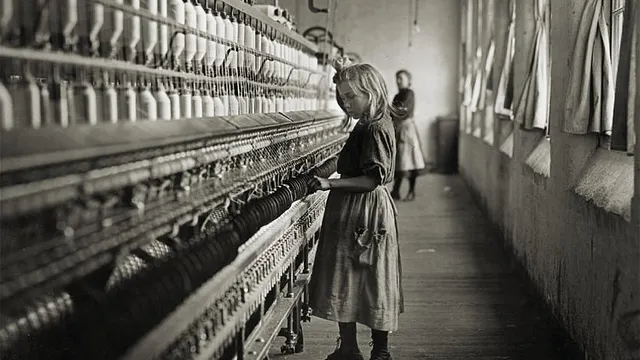
How far we’ve come since then.
And yet, how far we haven’t. There is still child-labor in many countries world-wide. Clothing for sale in Europe can be made by children as young as five years old. Children, exposed to toxic chemicals and hazardous machines. Check what you buy.
I could’ve picked a 1000 photos for my article. This one was my choice.
I could’ve decided to remove this addendum from my article. But I didn’t.
Established in 1904, the National Child Labor Committee, existed to fight for the rights of child workers in the USA. They realized that the most powerful tool they had was to show the real face of these children. They believed that seeing these images of child labor would awaken the citizens to demand change.
When Lewis Hine, an investigative photographer, came across Sadie Pfeifer, one of the smallest children at work. Standing at just 48 inches, he knew he had a shot that would change peoples views.
This photograph along with others was a crucial part of the campaign which led to a change in legislation. The outcome of which was a 50% cut in the number of child laborers over a 10 year period.